
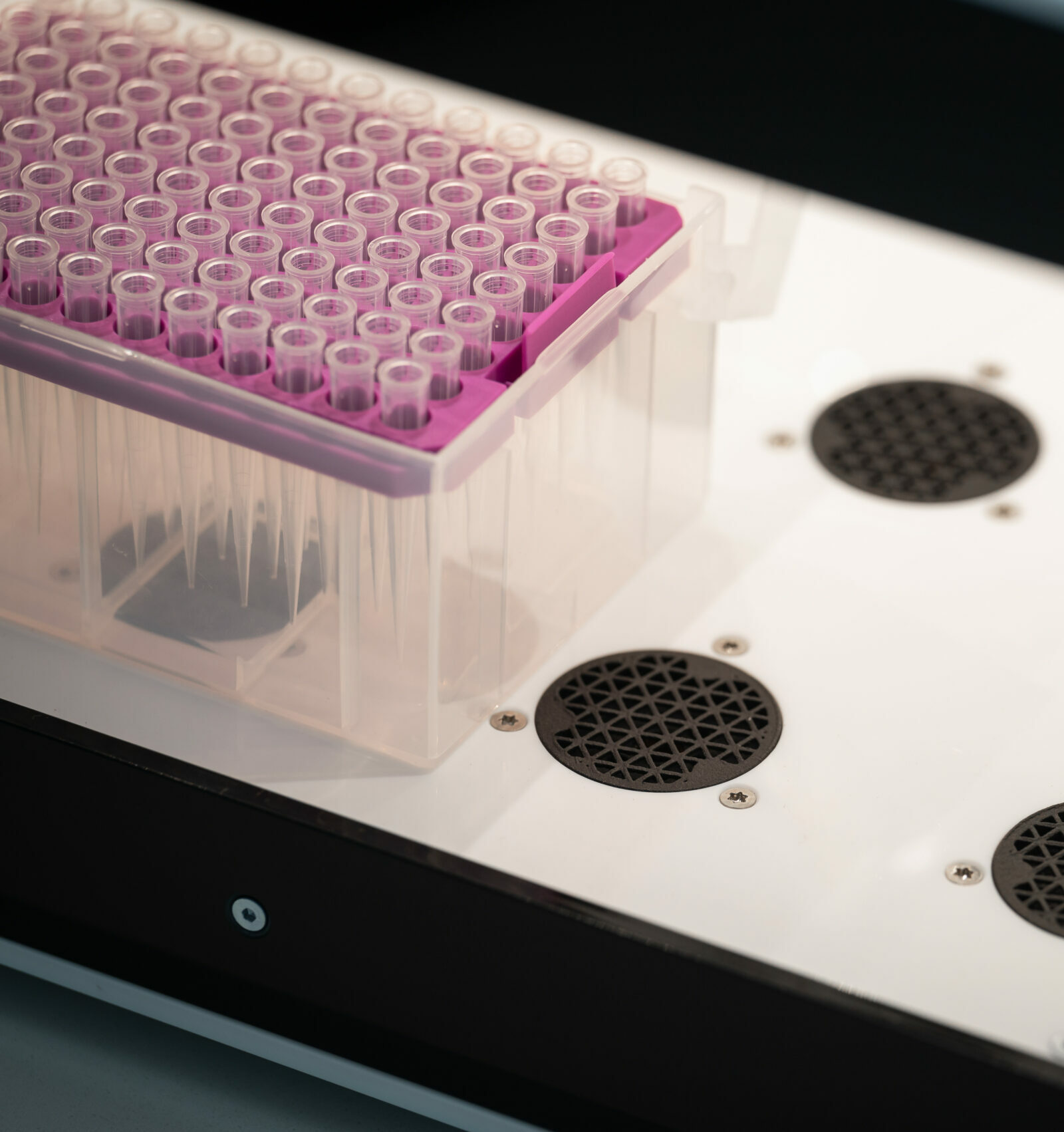
Plasmatico, an innovative non-thermal plasma (NTP) sterilization device, has demonstrated significant potential in combating the monkeypox virus (MpoxV). Recent rigorous laboratory tests conducted at the prestigious Institute of Organic Chemistry and Biochemistry (IOCB / ÚOCHB) of the Czech Academy of Sciences in Prague proved its definitive effectiveness in reducing viral loads on contaminated surfaces.
While alternative disinfection methods exist, Plasmatico represents one of the most advanced, fast, and ecologically sound approaches to date, particularly for sterilizing delicate and heat-sensitive materials.
Innovation in Virus Inactivation
Mpox (formerly monkeypox), a viral disease caused by the Orthopoxvirus genus, continues to pose serious challenges to healthcare systems and infection control teams worldwide. With rapid spread across continents and substantial outbreaks in Europe, the Americas, and Africa, finding effective and innovative tools for virus inactivation has become critical.
Plasmatico harnesses low-temperature plasma technology, providing a unique alternative to conventional chemical disinfectants and thermal autoclaves. Its ability to safely and efficiently deactivate viral particles on heat-sensitive and chemically delicate surfaces—such as optical lenses, polymers, delicate electronics, and diagnostic sensors—sets it apart from legacy technologies.
Laboratory Validation Results
Rigorous testing in collaboration with virology specialists at IOCB Prague evaluated the virucidal potential of Plasmatico against the mpox virus (strain hMpxV/Czech Republic/MHI-001/2022):
- 60-Minute Exposure: Achieved a 99.97% reduction in viral titers across both human and primate cell cultures.
- 90-Minute Exposure: Resulted in total virucidal inactivation (100.00% reduction), eliminating all detectable viral activity on contaminated substrates.
Global Context: A Persistent Public Health Threat
The ongoing mpox outbreak has underscored the vulnerability of clinical and research settings to emerging viral strains. According to World Health Organization (WHO) epidemiological reports, more than 127 countries have reported laboratory-confirmed cases, totaling over 117,000 infections and hundreds of fatalities globally.
- Americas & Europe: Countries such as the United States (over 34,000 cases) and Brazil (over 13,000 cases) have faced substantial infection burdens, while European nations including Spain, France, and Germany reported over 28,000 cumulative cases.
- Clade Distribution: Global transmission has been driven primarily by Clade IIb, alongside ongoing human-to-human transmission of Clade Ib strains in Africa.
Plasmatico’s Strategic Role in Public Health
Amid these epidemiological challenges, Plasmatico represents a vital technological leap. Unlike traditional autoclaving that destroys plastics or chemical wipe-downs that depend on human application consistency and leave toxic residues, Plasmatico delivers automated, contact-free physical disinfection.
Its sealed chamber ensures complete uniform exposure to reactive oxygen and nitrogen species (RONS), ultraviolet radiation, and electric fields generated by the non-thermal plasma, dismantling viral envelopes and genetic material without increasing the chamber temperature beyond 5–10 °C above ambient.
The Path Forward
As global health authorities and research laboratories prepare for evolving viral and bacterial threats, incorporating validated physical decontamination devices like Plasmatico provides a durable frontline defense. Plasmatico combines rigorous scientific verification with practical clinical utility, setting a new benchmark for pathogen control.